
On Monday, 3 August, continuous trading stopped at 3:15 pm as scheduled, and the Nifty sat near 24,573 on every screen in the country. Fifteen minutes later the official close printed at 24,774: about 200 points higher, roughly 0.8%, and not one visible trade behind it. The futures barely moved. Call them the 200 points that never traded.
Nothing broke. India had just changed how its closing price is made, and the opening sessions were what the birth of a new mechanism looks like. Here is the whole thing in five pictures.
The closing price is not just the last number of the day. It runs the system:
One number, once a day, carrying more freight than any other print. That is why the method behind it matters, and why anyone wanting to bend a market bends it here.
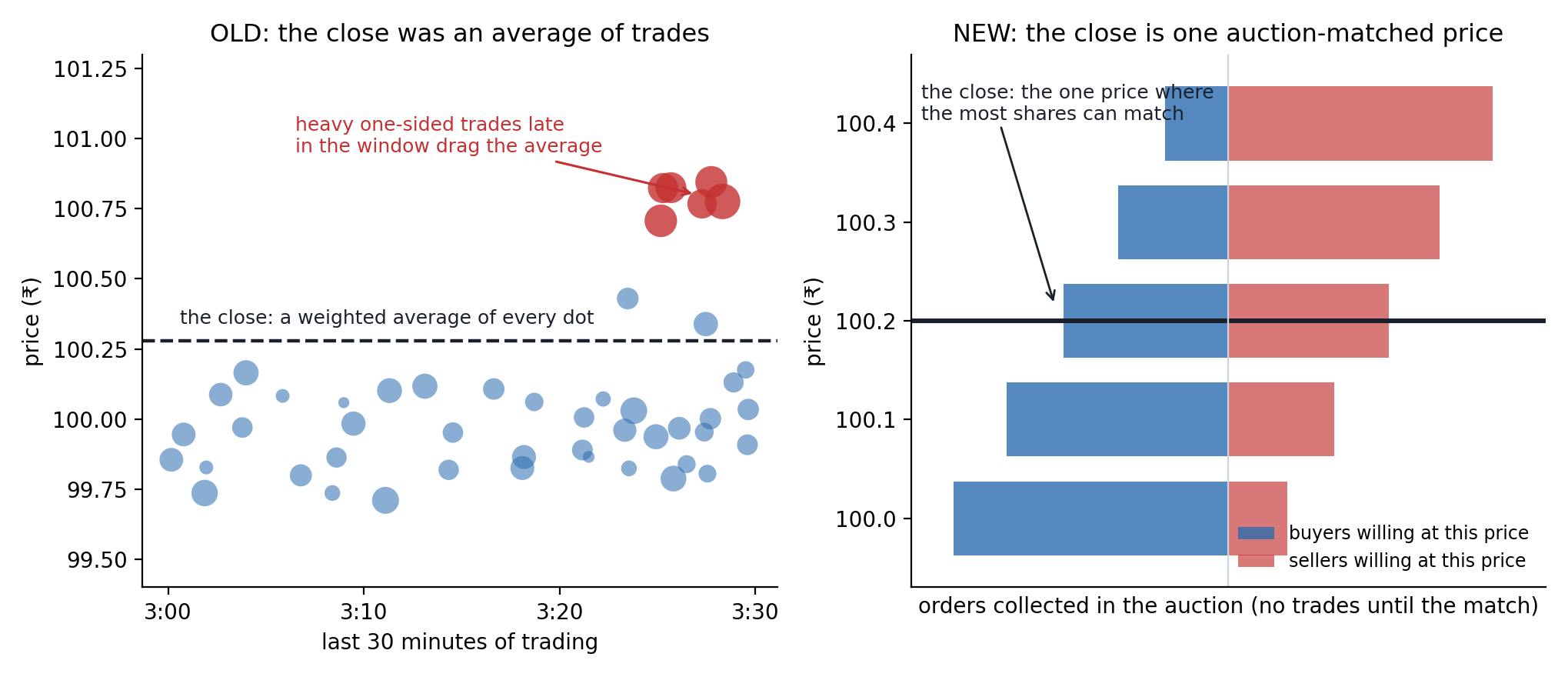 Left, the old way: the close was a volume-weighted average of the last 30 minutes of trades, and heavy one-sided trading late in the window could drag it. Right, the new way: orders are collected with no trading, and the close is the single price where the most shares can match.
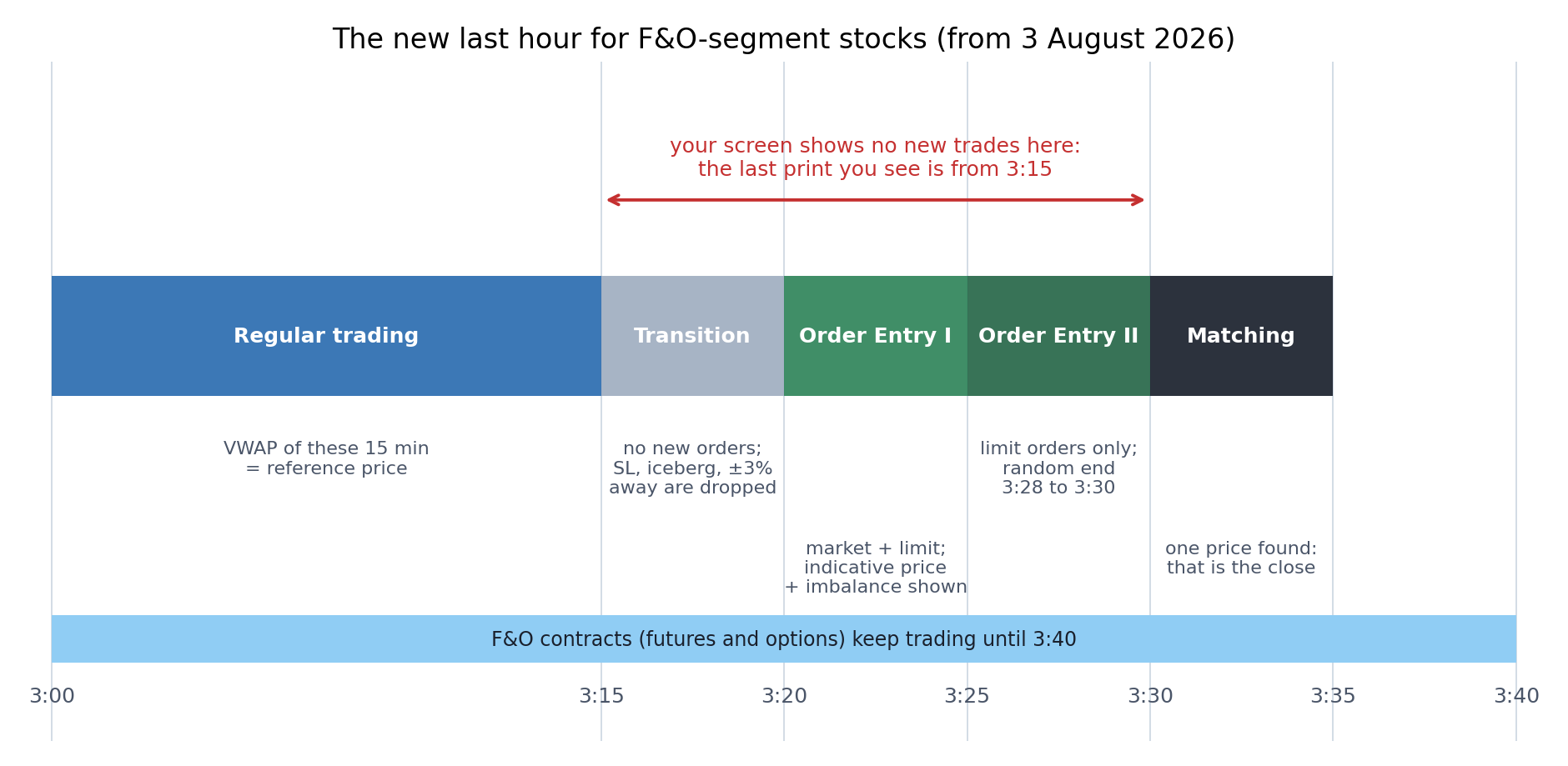 The new last hour for F&O-segment stocks. The red bracket is the part that confused everyone: between 3:15 and the match, screens show no new trades at all.
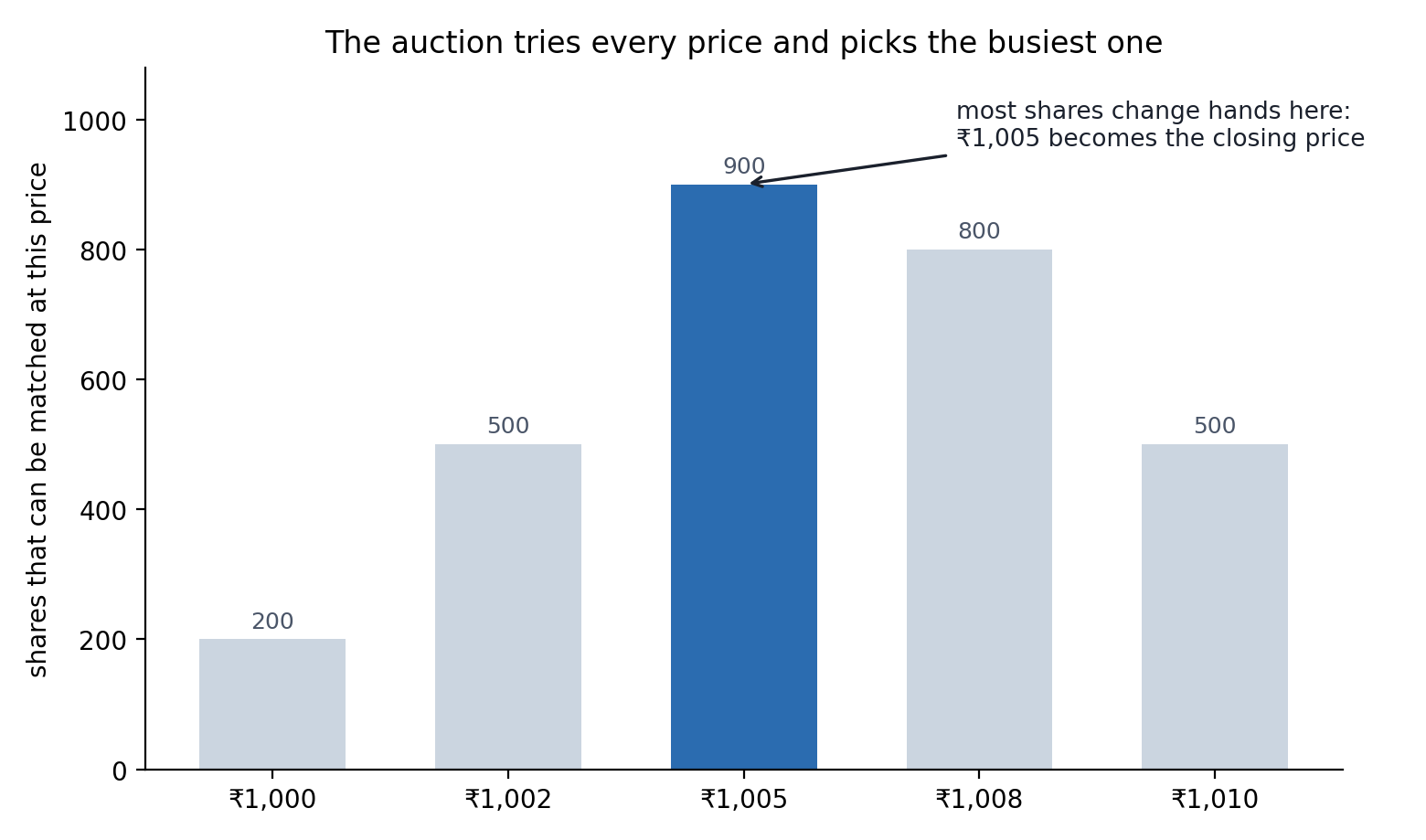 The exchange tries every candidate price and counts the shares that could actually match at each. The busiest price wins. Here ₹1,005 matches 900 shares and becomes the close.
A buyer at ₹1,010 happily pays less; a seller at ₹1,000 happily receives more. Stack that logic across every order and one price matches the most volume. That price is the close, and the auction trades execute there.
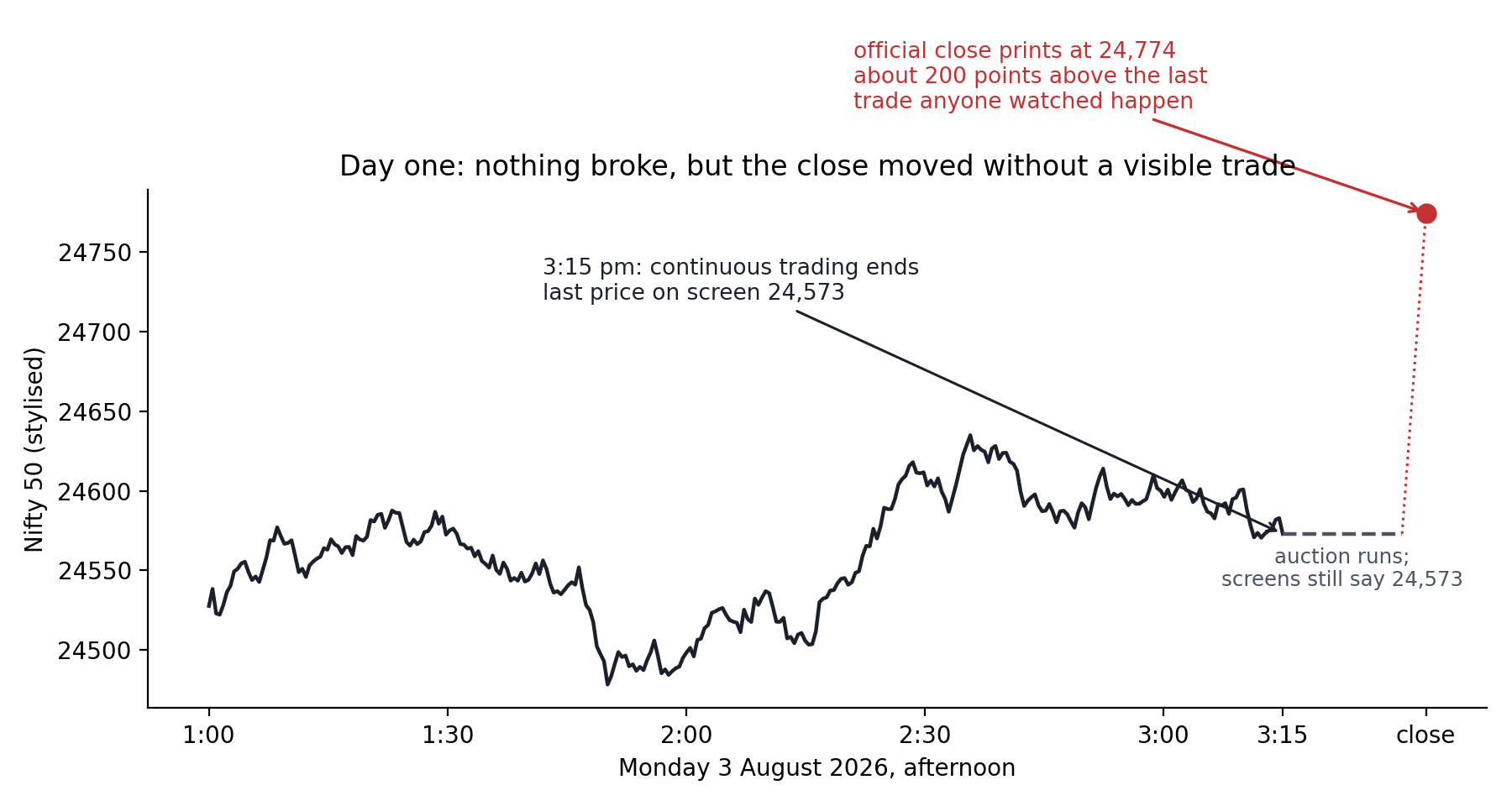 Monday, stylised. The chart ends at 3:15 near 24,573, holds flat while the auction runs, and the close then prints near 24,774. The gap never appeared as a trade on any screen.
Four things happened at once in those first sessions, and they blended into one scary impression:
And the mechanism has already sat its first real exam: Tuesday the 4th was the first weekly options expiry under the new close, and the auction again moved the official close by roughly 0.6% against the 3:15 level. Expiry Tuesdays will stay the sternest test for a while yet.
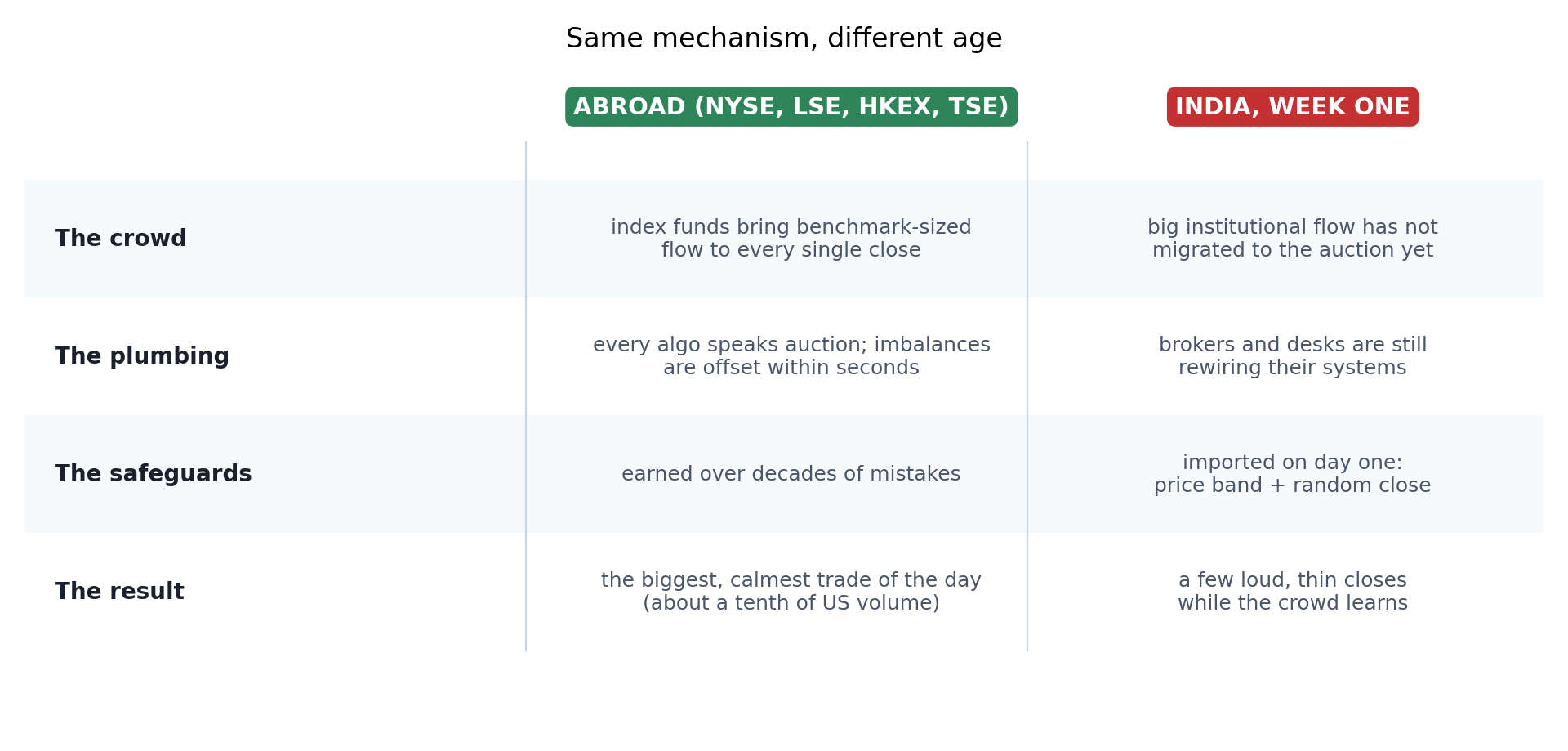 The honest comparison. Abroad, the closing auction is the biggest and calmest trade of the day, roughly a tenth of US volume. India imported the mature safeguards on day one; the crowd and the plumbing take longer.
Hong Kong is the precedent worth knowing: launched a closing auction in 2008, suspended it in 2009 after wild closes, relaunched it in 2016 with price bands and a random close. Today it is one of the most boring parts of their day. Boring is the destination. India skipped straight to the version-two design; the only thing that cannot be imported is the crowd.
And why only now? India went electronic in 1994, but the close stayed a formula because the formula mostly worked. Then passive money exploded, our index options became the largest in the world, and 2025's enforcement made the old close's weakness front-page news. The cost-benefit flipped.
The crowd will find the auction; it always does. Whether the new close actually resists the games the old one invited is the deeper question, and it is exactly where my current series is heading. This was the new close's opening week, in pictures.
